Retail
Activity in the retail property market has improved throughout 2025 following a weaker period. Leasing and transaction activity show signs of normalisation, supported by rising retail turnover and increasing interest from international investors. While market activity continues to be centred on prime assets, investor interest is showing signs of broadening ahead of 2026.
General Overview
Improved macroeconomic prospects, including expectations of real wage growth and gradual interest rate cuts, are set to strengthen purchasing power and support further growth in private consumption. Retailers have reported increased turnover in 2025, indicating an improvement in underlying demand. In addition, Virke forecasts retail turnover growth of approximately 5 per cent in 2026, providing a supportive backdrop for both leasing and investment activity going forward.
0
%
Virke forecast: retail turnover growth in 2026
6 Retail
5
%
Retail-related property transactions of total investment volume in 2025
Transaction Market
Retail-related property transactions accounted for approximately 12 percent of total investment volume in 2025. This represents a higher share compared with 2024, although the level remains below the 10-year average. Activity has primarily been concentrated around prime properties, where investor interest has proven more resilient.
Throughout 2025, there has been a growing share of unlevered investors increasing their exposure to the retail segment. One example is OPF’s acquisition of the neighbourhood shopping centre Bekkestua Senter. In addition, PKH, together with Arcanum Eiendom and Winta Utvikling, acquired Smalvollveien 65, a big-box retail property at Alnabru with several large and financially solid retail tenants. Increased investor interest, combined with selective demand for high-quality assets, has contributed to stable prime yield levels. Yields for high-street retail properties are at 4.50 percent, while yields for shopping centres and big-box properties are at 5.75 percent.
Rent levels for high quality retail space, NOK per sq.m
6 Handel
Rental Market
Leasing activity within the retail sector strengthened in the second half of 2025, primarily driven by international retailers entering the Norwegian market. Demand has been particularly strong from large, well-established international retail concepts and Swedish fashion brands. Such early inflows of international occupiers are often regarded as an indicator of improving market conditions.
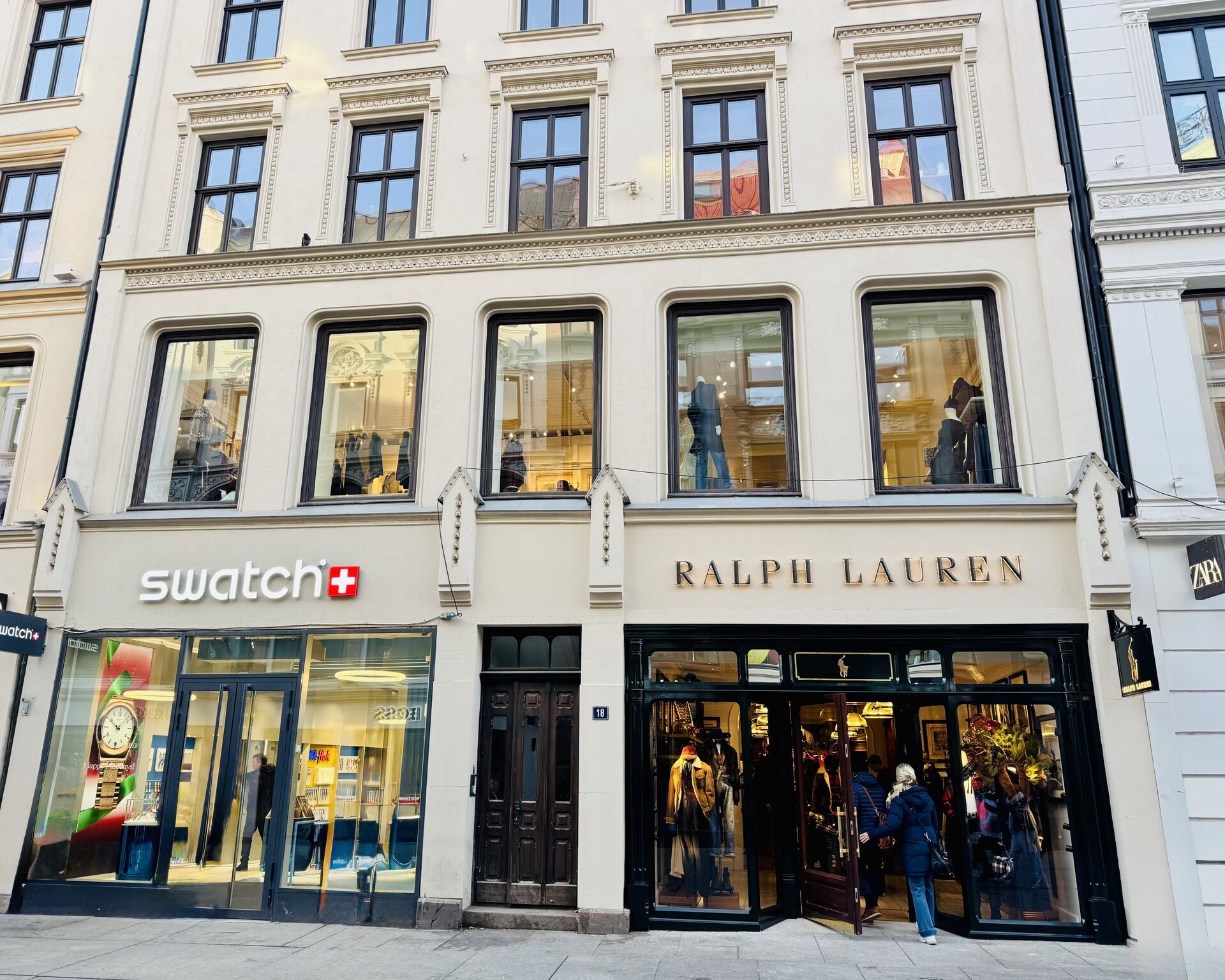
Akershus Eiendom served as leasing advisor to OJH Holding for Karl Johans gate 18 to Ralph Lauren. Photo: Remi N. Olsen
Demand has been strongest for prime high-street locations, supported by limited supply and increasing interest from international brands seeking to benefit from a weak Norwegian krone and attractive entry levels. This interest is expected to gradually extend to well-located secondary retail areas and other segments, including shopping centres, retail parks and big-box concepts. In certain micro-locations, rental growth has been observed, and in AAA high-street locations prime rental levels have recently been confirmed through completed lease transactions.
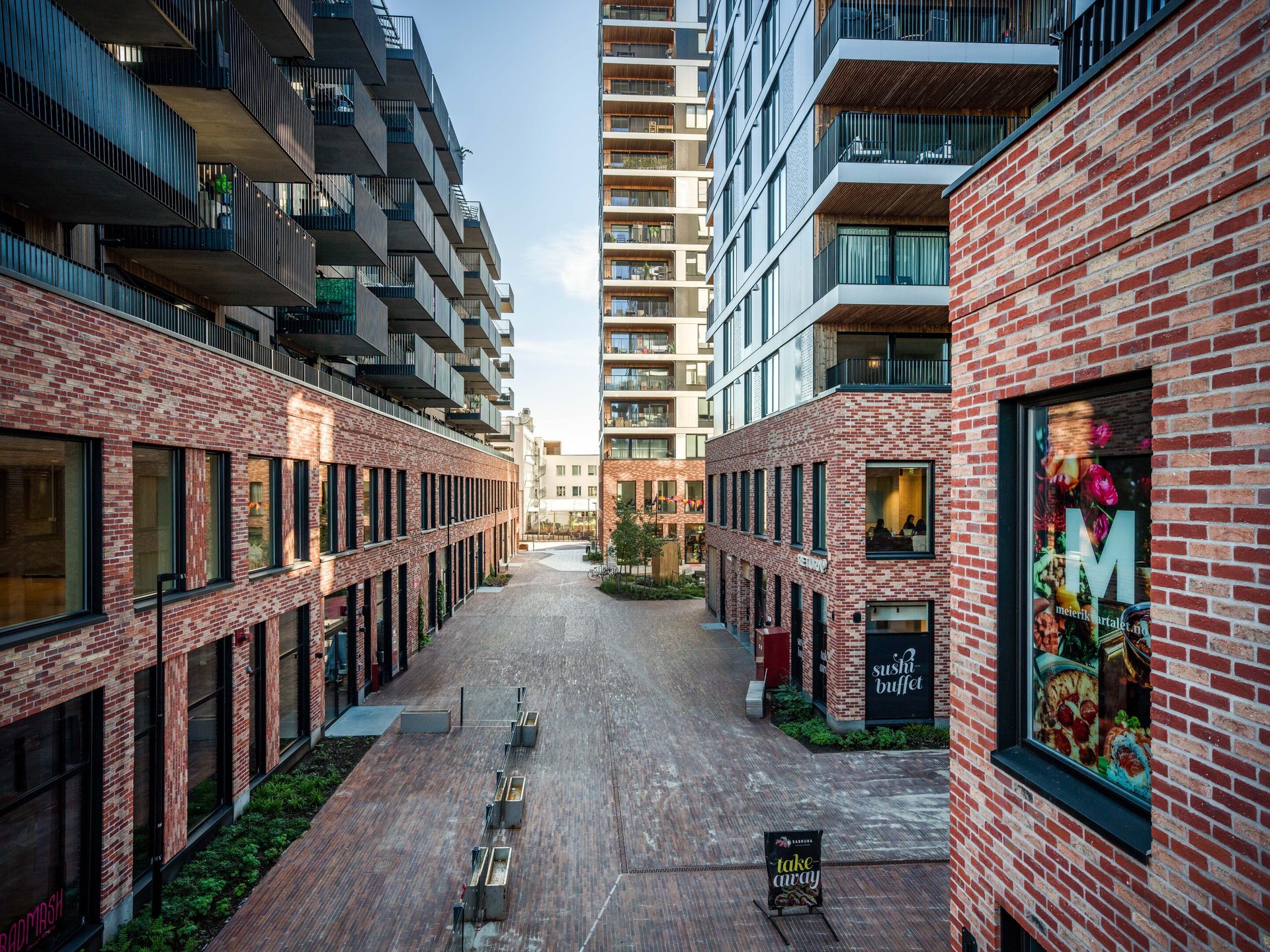
Akershus Eiendom served as exclusive sales advisor to Stor-Oslo Eiendom in the divestment of Meierikvartalet Bygulv to Hvam Invest. Photo: Knut Neerland
Prime yield
High street
Shopping centre
Big-box
Rent levels NOK/sqm
4.
35
%
5.
60
%
5.
60
%
2,
750
15
,000
12,
450
Key figures
Outlook